1- 16 and.... elgible to vote? February 5, 2008
2- Cell Phones for Scholastic Achievement February 28, 2008
3- Role Models March 5, 2008
4- Daylight Savings Time March 19, 2008
5- Cage Of Stars April 4, 2008
6- Ferentz LaFargue April 16, 2008
7- The Paper May 14, 2008
8- Portfolio Reflection June 11,2008
Wednesday, June 11, 2008

Reflection

My favorite article that I've written in my portfolio is my Ferentz Lefargue article because out of all of them, I took the most time and researched it to make sure I got it right. Even though I stumbled alittle with how I wanted it to sound, and turned it in past deadline, I think it turned out really well.
My least favorite article I wrote in my portfolio is my role model article mainly because I rushed it to make sure I made deadline. I rambled through it and it doesn't sound like I want it at all. I honestly think that its the worst article that I ever wrote all because I really didn't know what I wanted to say, I had no main focus, and It was just..... blah.
This semester, I've learned alot about what and how to write different articles in different styles. The different types and techniques are used to distinguish the different sections of the paper and they have to fit that section or it throws the paper out of whack. Many different aspects my writing style have changed and developed into something I didn't expect it to and its made me a better writer and journalist.
Wednesday, May 14, 2008
The Paper

Creating that wonderful thing we call a school newspaper takes a lot of time and effort. Getting articles, editing, and laying out the paper is a job on its own. Not to mention having everything ready to publish, and making sure it’s distributed to the school so everyone can read your hard work.
There’s never been any show out that actually shows the process of making a school newspaper until now.
TV’s new reality show, The Paper documents the life of the newspaper staff at Cypress Bay High School in Weston, Florida. It shows the trials and tribulations of writing and laying out the paper, and shows the effects that being on the newspaper staff have on your personal life.
The show premiered on April fourteenth at 10:30 to a dramatic start. The first episode showed the competition between Amanda, Alex, Adam, and Gianna for the coveted editor-in-chief position of the school's award winning paper, The Circuit.
There’s never been any show out that actually shows the process of making a school newspaper until now.
TV’s new reality show, The Paper documents the life of the newspaper staff at Cypress Bay High School in Weston, Florida. It shows the trials and tribulations of writing and laying out the paper, and shows the effects that being on the newspaper staff have on your personal life.
The show premiered on April fourteenth at 10:30 to a dramatic start. The first episode showed the competition between Amanda, Alex, Adam, and Gianna for the coveted editor-in-chief position of the school's award winning paper, The Circuit.
They all wrote essays on why they deserved the job and their journalism teacher, Ms. Weiss chose the winner.
Alex thought he should have the spot because of the way he brought the staff together to work as a team. Adam wanted the spot because of the lengths he goes to in order to keep the paper in running order, and Amanda wanted the spot because of her dedication to the paper and the amount of effort she puts in to make the paper a success.
Amanda won the editor-in-chief position and everyone got upset because no one thought she deserved it and felt that she would treat it as if she was the “Queen” and they were all the “Workers.” They said that the paper would be in shambles if she got the position and started plotting her downfall as editor-in-chief. It sparked the controversy, rivalries, and strained relationships going on that we see every week on the show.
Although most reality shows these days seem to be scripted, “The Paper” is a refreshing view of raw emotions and feelings as they actually happen. The show is a vivid portrayal of backstabbing, lying, envy, two-facedness, and jealousy that you can only truly see in high school.
Wednesday, April 16, 2008
Ferentz Lafargue

For the first time in about fourteen years, Ferentz Lafargue walked the halls of Jamaica High School, no longer as a student but as a literary professor and accomplished author. As a member of Jamaica's alumni, he was given the opportunity to come back and share his experiences with current students.
At the age of five, Ferentz Lafargue and his family moved from Haiti to Jamaica, Queens. He graduated from Jamaica in 1994. He then continued his education at Queens College, where he received his BA in 1998. He then attended Yale University, where he received his PH.D in African American Studies. He is now a literary professor, teaching 19th and 20th century African American and American Literature at Eugene Lang, a liberal arts college in New York.
While he was attending Jamaica, he was in the school band, on the baseball team, and wrote for the school paper, The Hilltopper. He also wrote for the publication New Youth Connection. While here, he felt as if he rushed his experience because he was in a hurry to graduate. Many of his teachers saw his potential and unbeknownst to him, was groomed to help him achieve his future profession.
After graduating from Queens College in 1998, he went to South Africa for a music concert, where he saw many of his musical influences. He was surprised to see all types of people coming together on a common ground: music.
He wrote Songs in the Key of my Life after he graduated from Yale and moved back to New York. He was inspired by the "series of accidents" going on in his life and the songs that got him through them. One of the hardest chapters for him to write and fought to keep in his book was for the song "Me so Horny" by 2 Live Crew. While he was in 7th grade, one of his friends committed suicide after graduating from middle school. That was one of the songs he and his friends would listen to everyday and the hook came from the movie Full Metal Jacket. He was surprised at the affects a song and a movie had on him and his friends.
Ferentz Lafargues' personal experiences translated into songs connect with many different people no matter the situations your going through.
"He related his presentation to us as teens because he spoke to us about things he went through and what were going through now" said Markeya Davis, a junior at Jamaica.
Ferentz Lafargues' visit back to Jamaica gave students a picture of what a graduate from Jamaica can accomplish after leaving if you are motivated to succeed.
Friday, April 4, 2008
Cage of Stars
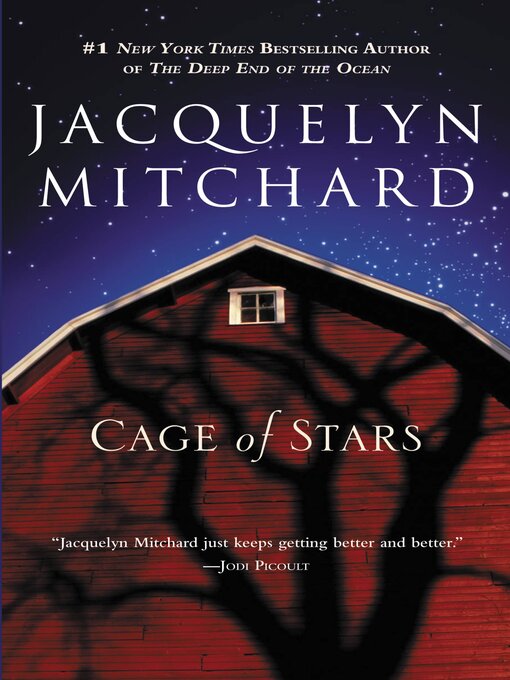
Cage of Stars by Jacquelyn Mitchard is an interesting novel that paints a vivid picture of vengeance, atonement, and mercy.
Cage of Stars is a novel about the life of Veronica Swan, a girl who witnesses the murders of her two younger sisters. The murderer, a schizophrenic man named Scott Early, was sentenced to a maximum security facility for the mentally ill. When he was released, she set out on a journey to avenge her sisters’ death because she felt as if he didn’t pay for it. While doing so, she realizes what it truly means to forgive once she saw that he had come to terms with what he had done.
The turning point of the story was when Scott wrote Veronica a letter saying that even though she tried to disguise who she was, he knew who she was and that she came to kill him. Scott made it easy for her because he knew that she couldn’t forgive him, so he tried to kill himself for her by putting a plastic bag over his head, attempting to smother himself. Veronica watched him struggle for a while at first but she then broke the bag, resuscitated him, and called the paramedics for him.
The books made this seem believable by having Veronica, fueled by a mixture of emotions, start an interesting monologue. It started by Veronica calling him a coward, saying that he was taking the easy way out, and ended with how she couldn’t believe that she was saving the man who killed her sisters. It basically said everything that was going on in her head as the events were happening.
Cage of Stars is a mainly dramatic book with a few hints of mystery. The emotions shown by the characters help them develop and mature as the book goes on. They also help set the moods for certain scenes and confrontations between each person.
Cage of Stars also helps with the stereotype given to the Mormon religion by setting some of the ridiculous rumors to rest and telling the truth such as Mormon men are bigamist, meaning that they have multiple wives and that Mormons kill people for atonement or to pay for their sins.
This book is highly recommended because of its vivid portrayal of a vendetta gone right. It is available to check out in the Jamaica High School Library.
Wednesday, March 19, 2008
Daylight Savings Time
 Benjamin Franklin once said, “Early to bed, early to rise makes a man healthy, wealthy and wise.” Despite Franklin’s wisdom, it’s difficult to drag yourself out of bed when it feels like you’re missing time.
In the early hours of March 9th, clocks around the world miraculously jumped from 1:59am to 3:00am, signaling the start of Daylight Savings Time. Now, we get a few extra hours of Daylight in the day.
Daylight Savings Time was invented by William Willett, a prominent English builder and outdoorsman in 1900 when he observed with dismay how many Londoners slept through the best part of a summer day and disliked cutting short his golf games short at dusk.
His solution was to advance the clock during the summer months so the sun was out longer. He published his proposal two years after but Daylight Savings Time wasn’t adopted until 1918. It was to start the last Sunday in April and end the second Sunday in October.
On July 9, 1986, President Ronald Regan changed its start date, from its adopted date of the last Sunday in April to the first Sunday in April. The day it ended remained unchanged for almost 20 years.
In August 8, 2005, President Bush signed the Energy Policy Act of 2005. According to the policy, Daylight Savings Time was to start on the second Sunday in March and end the first Sunday in November in an attempt to preserve energy, because or the extra hours of daylight. It came into motion in 2007.
“I can’t stand Daylight Savings Time,” says a disgruntled Jamaica High School junior. “I’m used to having that extra hour of sleep”
“I like Daylight Savings Time,” says another Jamaica High School student. “Since it is lighter later outside, I can stay outside longer.”
Whether it be more sunlight outside, or yearning for that extra hour of sleep you lose because of it, Daylight Savings Time, it changes aspects of our everyday life.
Wednesday, March 5, 2008
Role Models

Role models are people we look up to. Some of us look up to athletes, actors, and musicians. Others look to parents or older siblings. Either way, role models are the people we strive to be like and because of that, we emulate them as much as we can.
Whether it be how they dress, their hairstyles, what they say, and what they do, we think its cool. But what happens when our role models make mistakes? What if the role modes' influence is negative? Does that make a difference?
Having a negative influence can have negative effects on someone but we never think about that until the dust settles. When we see someone doing something and may find it intriguing, what do we do? We copy and start doing it the next day, blissfully ignorant.
The big "blunders" role models make tend to become popular trends in our society today. If we see someone going out all night and partying, we'll assume that's its cool and do the same, thinking "Oh, If so and so is doing it, it must be okay."
Our actions can have long lasting effects not just on us but on the people around us. Another thing to consider is, if you have younger sibling or cousins or nieces and nephews in your life, they might make you out to be their role model. If they see you doing something you know you shouldn't but you do it anyway, they'll think it's cool because your doing it and the errors go full circle.
Subscribe to:
Posts (Atom)